Nutrition by the Numbers
I looked at real numbers about sugar intake, obesity, and fruit and vegetable habits. Here is what stood out.
I looked at real numbers about sugar intake, obesity, and fruit and vegetable habits. Here is what stood out.
We consume way too much added sugar: The American Heart Association suggests 25 grams of added sugar per day for women, and 36 grams a day for men. But the average American eats about 77 grams of added sugar per day, and this is even higher for teenagers. This amount is nearly three times the daily maximum.
The majority of this sugar is derived from drinks such as soda, energy drinks, sugary coffee, and juice, rather than whole foods such as fruit. Just one regular can of soda contains about 39 grams of sugar alone, which by itself exceeds the daily maximum.
Obesity rates are soaring: The CDC says that more than 1 in 5 children and adolescents in the US (roughly 19.7%) have obesity, while 41.9% of adults do. Twenty years ago, these numbers were significantly smaller. The major causes include lack of fruit and vegetable consumption, drinking sugary beverages, and not moving the body enough throughout the day.
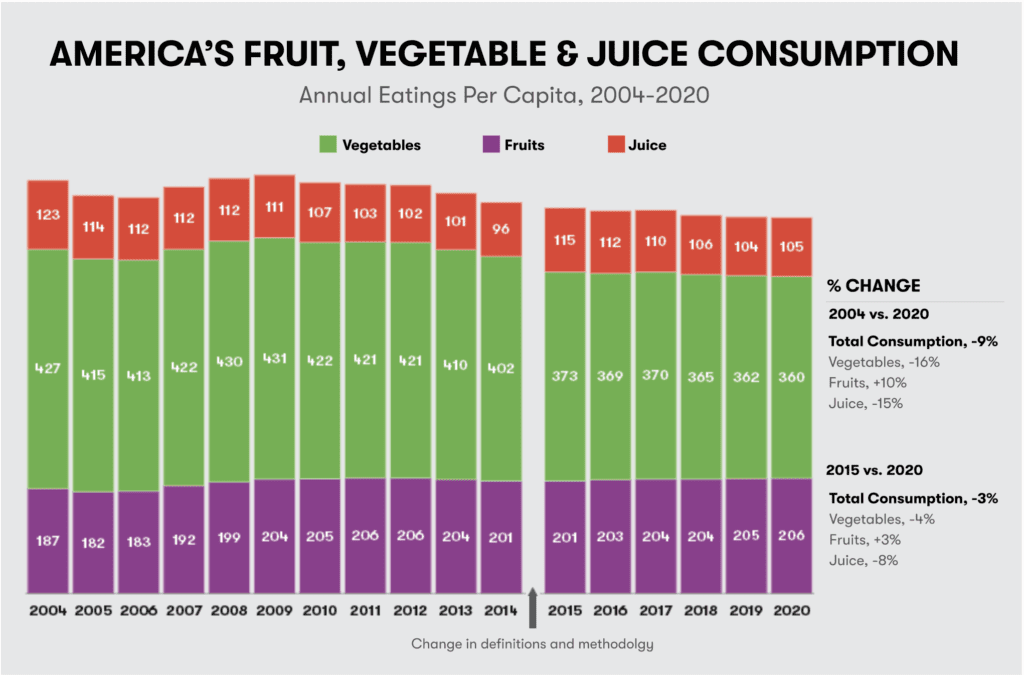
Fruit and vegetable consumption is low: The CDC also notes that only 1 in 10 adults meet the daily recommendations for fruits and vegetables. That is around 1.5-2 cups of fruit and 2-3 cups of vegetables a day. This number is even lower for teenagers, with most of us being nowhere close.
Why this matters
The fact is, the above three numbers all connect. Diets with too much added sugar and lack of fiber intake lead to type 2 diabetes, cardiovascular disease, and dental caries. The WHO estimates that today, unhealthy diet is one of the major risk factors for early mortality globally, surpassing smoking as the cause of death in some nations.
One of the more interesting parts of compiling this data for me is seeing how "normal" these statistics feel. Drinking soda with a meal, grabbing some chips at the end of the school day...this is nothing that anyone considers an issue, but these habits across millions of teens, summed together, amount to an alarming health crisis. It's my opinion that small changes like drinking water instead of soda, snacking on a piece of fruit rather than candy wouldn't feel like big changes, but the data shows they would.
Works Cited
- American Heart Association — Added Sugars
- Centers for Disease Control and Prevention — Adult Obesity Facts
- Centers for Disease Control and Prevention — Childhood Obesity Facts
- Centers for Disease Control and Prevention — Only 1 in 10 Adults Get Enough Fruits or Vegetables
- World Health Organization — Healthy Diet Fact Sheet